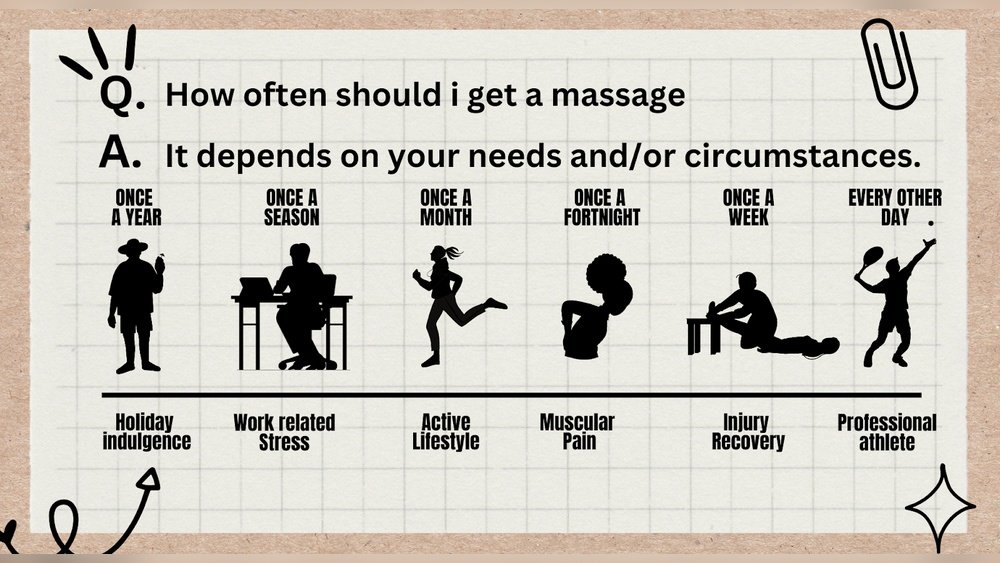
How often should you get massages to feel your best? If you’ve ever wondered whether one massage a month is enough or if weekly sessions could boost your well-being, you’re not alone.
Your body talks to you in subtle ways—aches, tension, stress—and knowing how often to listen with a massage can transform how you feel every day. Keep reading to discover the simple secrets that help you choose the perfect massage schedule tailored just for you.
Your body will thank you.
Benefits Of Regular Massages
Getting regular massages offers many benefits that improve your body and mind. It helps your muscles stay healthy and reduces pain. It also lowers stress and lifts your mood. Regular sessions can even help you sleep better and feel more relaxed.
Here are some key benefits of getting massages often and how they can help your daily life.
Physical Health Improvements
Massages ease muscle tension and reduce soreness. They improve blood flow, which helps heal injuries. Regular massages can lower blood pressure and boost your immune system. Your joints may feel less stiff and move better. It also helps reduce headaches caused by tight muscles.
Mental Health Benefits
Massages reduce stress hormones and increase feel-good chemicals. This can help lower anxiety and depression symptoms. You may feel calmer and more focused after a session. Massages create a quiet time to relax your mind. They also improve your mood by releasing tension.
Enhanced Sleep Quality
Massage therapy helps your body relax deeply. It can improve how fast you fall asleep and the quality of sleep. People who get massages often report less waking up at night. It helps ease insomnia and restless sleep problems. Better sleep leads to more energy during the day.
Factors Influencing Massage Frequency
Massage frequency depends on several factors. Each person’s needs and body are different. These factors guide how often a massage is best.
Understanding these helps you choose a good schedule. It also improves the benefits you get from massage.
Age And Health Conditions
Age plays a big role in massage frequency. Older adults may need more gentle, less frequent sessions.
Health conditions like arthritis or muscle pain also affect how often to get massages. Some conditions require regular therapy to manage pain and stiffness.
Talk with a doctor or therapist before starting massage treatments. They can suggest a safe and helpful schedule for your health.
Stress Levels And Lifestyle
High stress often calls for more frequent massages. Stress releases tension in muscles and mind.
Active lifestyles or jobs with physical work may require weekly or biweekly massages. This helps muscles recover and stay flexible.
People with calm, low-stress lives might only need monthly sessions. The goal is to maintain balance and comfort.
Type Of Massage
The kind of massage also matters. Deep tissue massages are intense and need more recovery time.
Swedish massages are gentler and can be done more often. They focus on relaxation and blood flow.
Specialty massages like sports or prenatal therapy have their own guidelines. Follow expert advice to get the best results.
Massage Frequency For Different Goals
Massage frequency varies based on your personal goals. Different needs require different schedules. Choosing the right frequency helps you get the best results. Below, find guidance for common massage goals.
Relaxation And Stress Relief
For relaxation, one massage every two weeks works well. It helps reduce tension and clear your mind. Regular sessions promote calm and better sleep. You can adjust frequency based on stress levels. Monthly sessions also benefit those with lower stress.
Pain Management
Chronic pain may require more frequent massages. Many find relief with one or two sessions per week. This helps ease muscle stiffness and improve mobility. After pain decreases, reduce sessions to maintain comfort. Consistency is key to managing pain effectively.
Athletic Performance And Recovery
Athletes often get massages several times a week. This supports muscle recovery and prevents injury. Post-workout massages reduce soreness and improve flexibility. Frequency depends on training intensity and goals. Regular massages help maintain peak performance.
Signs You Need More Frequent Massages
Noticing signs that you need massages more often can improve your health. Your body tells you when it needs extra care. Paying attention helps prevent pain and stress from building up.
Below are key signs that show your body might benefit from more frequent massage sessions. Understanding these can guide you to better wellness.
Chronic Muscle Tension
Muscles that stay tight all the time can cause discomfort. This tension reduces your movement and causes pain. Regular massages help release this tightness and improve blood flow.
If you feel constant stiffness or soreness, more frequent massages can ease the strain. This helps your muscles recover and feel relaxed again.
Recurring Stress Symptoms
Stress often shows as headaches, fatigue, or irritability. These symptoms can happen daily or after work. Massage lowers stress hormones and boosts relaxation.
When stress returns quickly, it means your body needs more care. Massage sessions more often can calm your mind and reduce these signs.
Delayed Recovery Times
Your body repairs itself after exercise or injury. If this takes longer than usual, massage may help. It speeds healing by improving circulation and reducing swelling.
Slow recovery means your muscles might be overworked or damaged. Getting massages more often supports faster healing and better muscle health.
Choosing The Right Massage Schedule
Choosing the right massage schedule depends on many factors. Your body’s needs, lifestyle, and goals all matter. A good massage routine can help with stress, pain, and overall wellness. Finding the right balance keeps your body feeling its best.
Weekly Vs Monthly Sessions
Weekly massages offer consistent relief from tension and pain. They work well for people with chronic issues or high stress. Monthly sessions suit those with minor aches or who want general relaxation. Both schedules have benefits. The choice depends on how your body reacts and your personal goals.
Customizing Based On Personal Needs
Each person’s body is different. Some need deep tissue work often, while others prefer gentle massages less often. Pay attention to how your body feels after each session. Adjust the frequency based on pain levels, stress, and recovery. Customizing your schedule helps keep your body healthy and happy.
Consulting Professionals
Talk to a massage therapist or healthcare provider. They can suggest the best massage frequency for your condition. Professionals assess your health and pain patterns. Their advice ensures you get the most benefit. Regular check-ins help fine-tune your schedule over time.

Cost And Time Considerations
Getting massages regularly can bring many health benefits. But cost and time are big factors to think about. Many wonder how often to get massages without stressing their wallet or schedule. This section helps balance those concerns for better self-care.
Budgeting For Regular Massages
Massages often cost between $50 and $120 per session. Prices depend on location, type, and therapist experience. Setting a monthly massage budget helps plan expenses. Some choose one massage a month to save money. Others prefer shorter sessions to reduce costs. Look for deals or packages that lower price per visit. Remember, investing in your health is worth some spending.
Finding Time In A Busy Schedule
People often struggle to fit massages into busy days. Work, family, and chores fill up hours fast. Shorter massages of 30 minutes can fit better than one-hour sessions. Scheduling massages during lunch breaks or weekends can help. Booking appointments in advance avoids last-minute stress. Consistency matters more than long sessions once in a while. Make massage time a priority for better results.
Alternative Massage Options
Professional massages are not the only choice. Self-massage tools like rollers and balls offer relief at home. Some apps guide you through easy massage routines. Chair massages provide quick comfort at some workplaces. Learning simple massage techniques can save money and time. These options support regular care when full sessions aren’t possible.
Tips To Maximize Massage Benefits
Massage therapy offers many benefits for both body and mind. To get the most from each session, some simple tips help improve results. Small actions before and after your massage can make a big difference. These tips also support your body’s recovery and enhance relaxation. Follow these guidelines to maximize the benefits of your massage.
Pre And Post-massage Care
Arrive early to relax before your massage. Avoid heavy meals or alcohol beforehand. Dress in comfortable clothes to ease tension. After the session, rest for at least 15 minutes. This helps your body absorb the massage effects. Use gentle stretching to keep muscles loose. Avoid strenuous activities for a few hours to prevent soreness.
Hydration And Nutrition
Drink plenty of water before and after your massage. Hydration helps flush out toxins released during the session. Choose light, healthy meals to support your body’s healing. Avoid salty or processed foods that cause inflammation. Fresh fruits and vegetables provide vitamins that aid recovery. Proper nutrition boosts your energy and muscle repair.
Incorporating Massage Into Wellness Routine
Schedule massages regularly based on your needs. Weekly or biweekly sessions work well for most people. Use massage as part of a balanced wellness plan. Combine it with exercise, good sleep, and stress management. Track how your body feels after each massage. Adjust the frequency to match your lifestyle and goals.


Frequently Asked Questions
How Often Should Beginners Get Massages?
Beginners should start with one massage every two weeks. This allows the body to adjust and benefits to build gradually. Frequency can increase based on comfort and needs. Regular sessions promote relaxation, reduce tension, and improve overall wellness.
Can Frequent Massages Improve Muscle Recovery?
Yes, frequent massages enhance muscle recovery by improving blood flow. They reduce soreness and speed healing after workouts. Athletes often get massages 1-3 times weekly. Consistent sessions help maintain flexibility and prevent injuries.
How Does Massage Frequency Affect Stress Relief?
Regular massages reduce stress hormones and promote relaxation. Getting massages weekly or biweekly helps manage anxiety effectively. Consistent sessions improve sleep quality and mood. The frequency depends on individual stress levels and lifestyle.
Is Monthly Massage Enough For Chronic Pain Relief?
Monthly massages can help manage chronic pain but may not be sufficient for all. More frequent sessions, like biweekly, often provide better symptom control. A personalized plan with a therapist is ideal for effective pain management.
Conclusion
Regular massages can improve your health and reduce stress. How often depends on your body and lifestyle. Some people benefit from weekly sessions, while others do well monthly. Listen to your body’s signals and adjust as needed. Consistency matters more than frequency alone.
Choose a schedule that fits your budget and time. Enjoy the relaxation and healing each massage brings. Small steps lead to better well-being over time. Take care of yourself, one massage at a time.
Related massage chair reviews:
 Which Osaki Massage Chair is Best? 50 Osakis Tested and Reviewed!
 50 Best 4D Massage Chairs Reviewed by Real Customers 2026
 50 Best Ergonomic Massage Chairs Perfect for Tall Individuals Reviewed 2026
 The 45 Best Utopia 3d Massage Chair Rated for 2026
 Best Massage Chairs Under $2000: Your Relaxation Reviews for 2026
 The Best 35 Affordable Full Body Massage Chairs Under $1000 Reviewed