
What is the Difference between Swedish And Deep Tissue Massage: Key Benefits Explained
Affiliate links — we may earn a commission
Are you curious about which massage style suits your needs better—Swedish or deep tissue? Both offer unique benefits, but understanding their differences can help you choose the right one for your body and mind.
Whether you’re seeking relaxation or relief from muscle tension, knowing what to expect from each massage will make your experience more satisfying. Keep reading to discover how Swedish and deep tissue massages work, and find out which one is the perfect fit for you.
Swedish Massage Basics
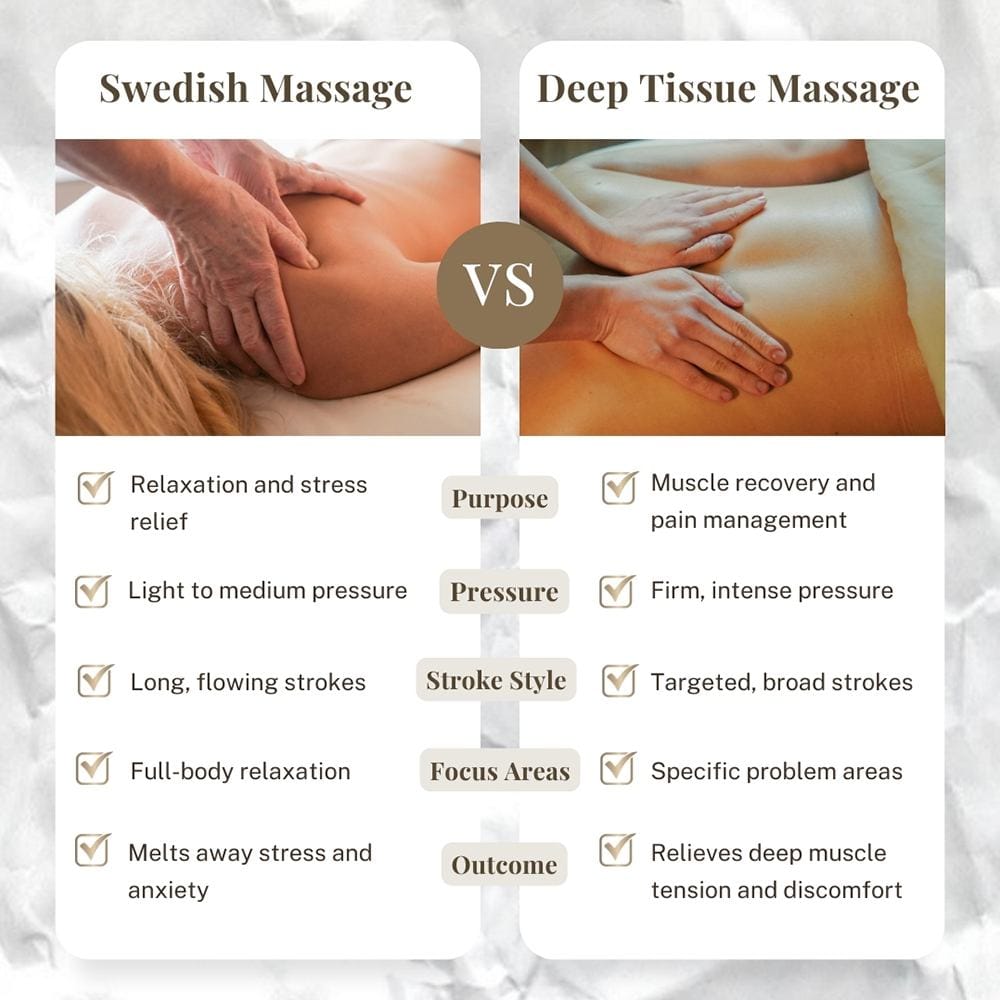
Swedish massage is one of the most popular types of massage. It focuses on relaxing the whole body. The massage uses long, smooth strokes to ease muscle tension. It also helps improve blood flow and reduce stress. Many people choose Swedish massage for a gentle and calming experience.
Understanding the basics of Swedish massage helps you know how it differs from deep tissue massage. The techniques, pressure, and goals are key factors.
Techniques Used
Swedish massage uses five main techniques. These include effleurage, petrissage, friction, tapotement, and vibration. Effleurage is a long, gliding stroke over the skin. Petrissage involves kneading and rolling muscles. Friction uses deep circular movements. Tapotement is rhythmic tapping or chopping. Vibration shakes or trembles the muscles gently.
Pressure Levels
The pressure in Swedish massage is light to medium. It does not cause pain or discomfort. The goal is to relax muscles, not to treat injuries. The therapist adjusts pressure based on your comfort. This makes it ideal for those new to massage or sensitive to touch.
Primary Goals
Swedish massage aims to relax muscles and improve circulation. It helps reduce stress and promote a sense of calm. The massage also eases muscle tension and stiffness. Many people use it to feel refreshed and less anxious. It supports overall wellness and mental relaxation.
Deep Tissue Massage Essentials
Deep tissue massage targets the deeper layers of muscles and connective tissue. It differs from lighter massage types by focusing on tension and chronic pain. This massage helps release tight areas and improve muscle function.
Understanding the essentials of deep tissue massage helps you decide if it suits your needs. Below are the key aspects that define this massage style.
Techniques Applied
Therapists use slow, firm strokes and deep finger pressure. They work on knots and stiff muscles to break down adhesions. Techniques include friction and stretching to improve muscle elasticity.
Intensity And Focus
Deep tissue massage uses strong pressure focused on problem areas. It can feel intense but should not cause sharp pain. The goal is to reach the deeper muscle layers without discomfort.
Main Objectives
The main aims are to reduce pain, improve movement, and ease muscle tension. It helps with injuries, chronic pain, and muscle recovery. This massage also promotes better blood flow and healing.
Comparing Techniques
Swedish and deep tissue massages differ mainly in the techniques used. These differences affect how the massage feels and what it targets. Understanding these techniques helps you choose the right massage for your needs.
Stroke Patterns
Swedish massage uses long, smooth strokes. These strokes cover large areas of the body gently. The movements help increase blood flow and relax muscles.
Deep tissue massage uses slower, firmer strokes. The pressure goes deeper into muscles and connective tissues. It focuses on specific problem areas and knots.
Targeted Muscle Layers
Swedish massage works mostly on the top muscle layers. It aims to relax the body and reduce tension softly. It is great for overall relaxation.
Deep tissue massage reaches deeper muscle layers. It targets tight muscles and chronic pain points. It helps release muscle knots and improve movement.
Session Experience
Swedish massage feels light and soothing. It often leaves you calm and refreshed. The pressure is gentle and easy to enjoy.
Deep tissue massage can feel intense or even a bit uncomfortable. It may cause some soreness after the session. This massage is best for those with muscle pain or stiffness.
Health Benefits Of Swedish Massage
Swedish massage offers many health benefits. It is gentle and relaxing. The technique uses long, smooth strokes to help your body heal and feel better. Many people choose Swedish massage to reduce stress and improve their overall wellness. Here are some key health benefits of Swedish massage.
Stress Relief
Swedish massage helps calm your mind and body. The gentle strokes lower stress hormones. This makes you feel peaceful and relaxed. Regular sessions can reduce anxiety and improve mood. Stress relief is one of the top reasons people try Swedish massage.
Improved Circulation
The massage moves blood through your body. Better circulation brings more oxygen and nutrients to your tissues. It also helps remove waste and toxins. Improved blood flow can speed up healing and reduce pain. Swedish massage supports your heart and overall health.
Muscle Relaxation
Swedish massage loosens tight muscles. The smooth strokes reduce muscle tension and stiffness. This helps ease soreness after exercise or daily activities. Relaxed muscles improve your flexibility and range of motion. It is ideal for those needing gentle muscle care.
Health Benefits Of Deep Tissue Massage
Deep tissue massage offers many health benefits beyond just relaxation. It targets muscles and connective tissues deeply. This massage helps relieve chronic pain and improves overall body function.
People often choose deep tissue massage for its strong and lasting effects. It can help heal injuries and correct body posture. Understanding these benefits can guide you to better health choices.
Pain Reduction
Deep tissue massage eases muscle tension that causes pain. It works on knots and tight muscles deeply. This massage lowers inflammation and increases blood flow. Many people feel less pain after a few sessions.
Injury Recovery
This massage helps break down scar tissue from injuries. It improves circulation, which speeds up healing. Deep tissue massage also relaxes tight muscles around injured areas. It supports faster and better recovery.
Posture Improvement
Tight muscles can cause poor posture and discomfort. Deep tissue massage releases these tight spots. It helps realign muscles and improve body balance. Better posture reduces strain on your back and neck.
Choosing The Right Massage
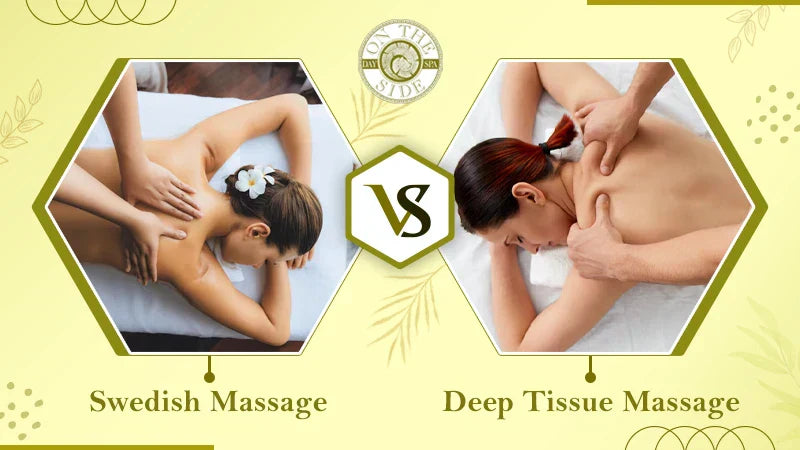
Choosing the right massage depends on what your body needs and what you want to achieve. Both Swedish and deep tissue massages offer great benefits, but they serve different purposes. Understanding your personal needs, physical conditions, and desired outcomes helps you pick the best option. This makes your massage experience more effective and enjoyable.
Personal Needs
Your massage choice starts with your own comfort and preferences. Swedish massage uses gentle strokes and light pressure. It suits those who want relaxation and stress relief. Deep tissue massage applies firm pressure and targets deeper muscles. It fits people who feel muscle tightness or pain. Think about how your body feels and what kind of touch you prefer.
Physical Conditions
Health issues play a big role in choosing a massage. Swedish massage is safe for almost everyone, especially if you have sensitive skin or mild muscle soreness. Deep tissue massage helps with chronic pain, injuries, or muscle knots. People with heart problems or certain skin conditions should check with a doctor before choosing deep tissue massage. Know your body’s limits and any health concerns.
Desired Outcomes
What do you want from your massage? Swedish massage improves blood flow, reduces tension, and calms the mind. It’s good for relaxation and general well-being. Deep tissue massage focuses on breaking down scar tissue and easing deep muscle pain. It helps improve mobility and speed up recovery. Pick the massage that matches your goals for the best results.
Aftercare Tips
After a Swedish or deep tissue massage, your body needs care to gain the most benefits. Proper aftercare helps reduce soreness and boosts healing. Follow these simple tips to feel better and keep your muscles healthy.
Hydration
Drinking water is key after any massage. It helps flush out toxins released during the massage. Aim to drink at least eight glasses of water the rest of the day. Avoid alcohol or caffeine as they can dehydrate your body.
Rest And Recovery
Give your body time to heal after a massage. Avoid heavy exercise or strenuous activities for 24 hours. Rest helps your muscles relax and recover fully. Good sleep also supports the healing process and reduces fatigue.
Stretching Recommendations
Gentle stretching keeps your muscles flexible after massage. Focus on slow, easy stretches that do not cause pain. Stretching improves blood flow and reduces muscle tightness. Avoid aggressive or deep stretches right after a deep tissue massage.
Frequently Asked Questions
What Is The Main Difference Between Swedish And Deep Tissue Massage?
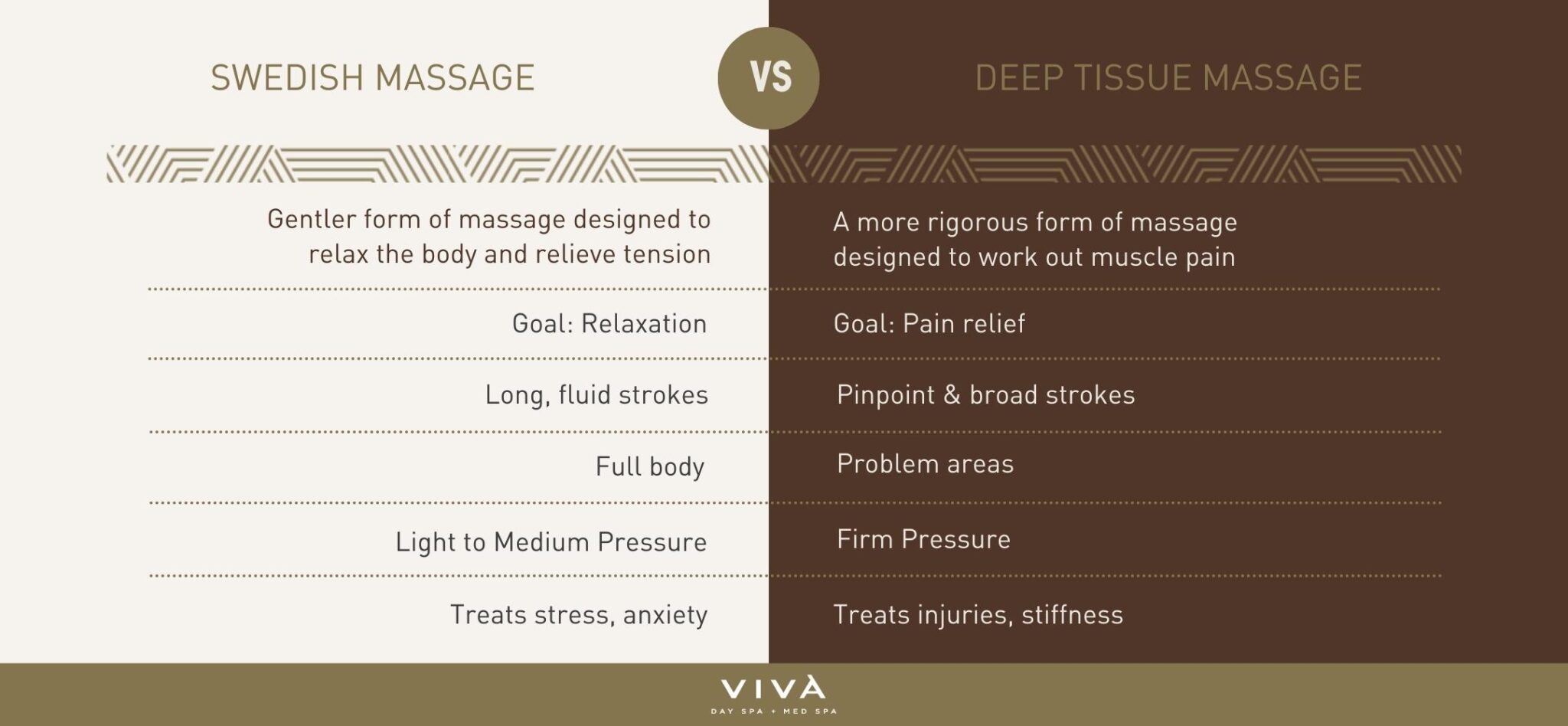
Swedish massage focuses on relaxation with gentle strokes. Deep tissue massage targets deeper muscle layers to relieve chronic tension and pain. The pressure in deep tissue massage is much stronger than in Swedish massage.
Which Massage Is Better For Muscle Pain Relief?
Deep tissue massage is better for chronic muscle pain and tightness. Swedish massage is ideal for stress relief and improving circulation but less effective for deep muscle issues.
How Do Swedish And Deep Tissue Massages Feel?
Swedish massage feels light, smooth, and relaxing. Deep tissue massage can feel intense or even slightly uncomfortable due to deep pressure on tight muscles.
Can Both Massages Improve Blood Circulation?
Yes, both Swedish and deep tissue massages improve blood flow. Swedish uses long strokes to enhance circulation, while deep tissue releases muscle knots to promote better blood movement.
Conclusion
Swedish and deep tissue massages serve different needs and benefits. Swedish massage focuses on relaxation with gentle strokes. Deep tissue massage targets tight muscles and knots with firm pressure. Choose based on your body’s needs and pain level. Both can improve circulation and reduce stress.
Knowing their differences helps you pick the best option. Your comfort and healing come first. Try both to see what suits you best. Simple and clear choices lead to better wellness.

Nora Whitfield
Contributing writer covering The world's #1 massage chair review and ratings site for all of your luxury massage chair needs..